Yesterday, my son and I visited St. Peter’s Seminary in Cardross, arguably one of the most famous abandoned buildings in Scotland. It’s now a ruin, surrounded by lush forests, and it’s a spectacular and haunting spot. The history of the place is fascinating, although it’s all surprisingly recent.
The building only dates back to 1966. It was constructed as a training centre for Catholic priests, and had a capacity for 100 students. Designed by famous architects Gillespie, Kidd & Coia, it was built in a very unconventional Brutalist style, with strong Le Corbusier influences. Spectacular, modern and impressive though the structure was, it proved difficult to maintain and was soon full of leaks. Almost as soon as it opened, major changes in demographics and the direction of the Catholic church resulted in a sharp decline in the number of trainee priests, and it never operated at capacity. The seminary closed in 1980, and the building then only saw use as a drug rehabilitation centre until 1987. Since then, it’s been abandoned, and exposed to the elements and vandalism, it’s now little more than a bare concrete shell. What remains is decaying rapidly, but as a Grade A listed building, not much can be done with it.
I last visited in 2019, and at the time, the site was still owned by the Catholic church. Given where it is, two miles from the village of Cardross and with poor road access, the site is almost impossible to secure, and the building had been an expensive millstone around the neck of the church for decades. They couldn’t sell it, couldn’t give it away, couldn’t demolish it and had to try and keep the site safe, an almost impossible task. In the summer of 2020, however, they managed to negotiate a deal with a community trust who took over the whole of the estate on which the Seminary sits. They had lofty but vague ideas about using the place for educational and community purposes, and almost six years after they took over, I was keen to see if anything on the site had changed.
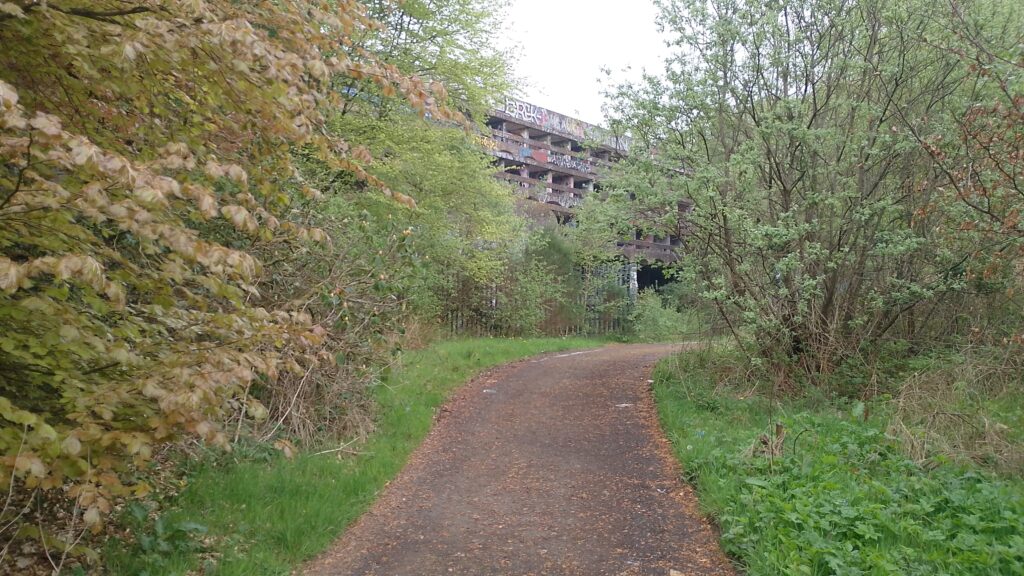
We travelled by train to Cardross and made our way to the Seminary on foot. Here’s Exhibit A in why it’s been such a challenge to do anything constructive with it since closure. Plenty of people have had ideas, from using it as a concert venue to an exhibition space, even an animation studio, but the first part of the journey there is up steeply-graded residential streets unsuited to the number of vehicles that would be drawn to major events. After a while, these streets give way to an even less suitable gravel track, and there’s pretty much nowhere you could put in any car parking. Unless you’re quite fit and active, you’re going to find walking up the hill a time-consuming struggle, and getting equipment into and out of the site for anything like a festival is going to be a complete non-starter.
I wondered whether the new owners would have improved security. I won’t give too much away, as I don’t believe urbexing should be made too easy, and it’s important not to encourage irresponsible use of the site, but there’s virtually nothing stopping you walking straight in, and on arrival we were greeted by a family with young kids just leaving. Any doubts I had about what I was doing disappeared at this point – it can’t be too bad if people are happy to let their kids into the building (unless they happen to be grossly irresponsible). In the couple of hours we spent there, we bumped into five other groups of people, so it’s clearly a popular spot, and any attempt to keep people away from the site has failed pretty spectacularly.
We found it was even easier than last time to access virtually the whole of the structure of the main building. There’s been token efforts to fence bits off over the years, but clearly determined visitors have made their way past these, and we managed to access vantage points that were off limits on our previous visit. These made for some pretty spectacular photos, a selection of which I will share with you here.
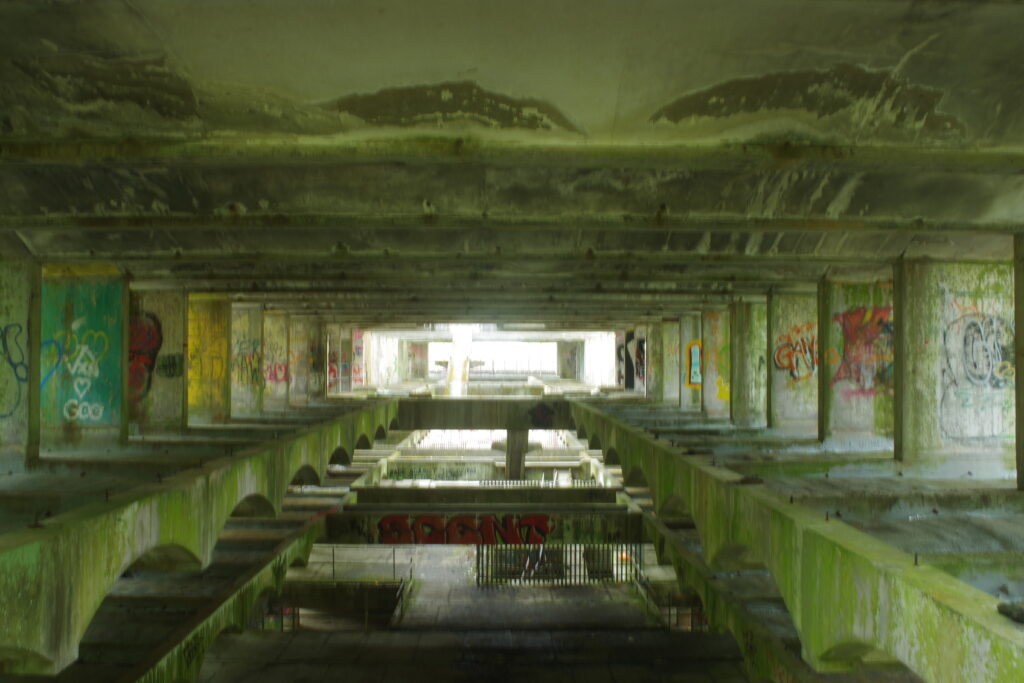
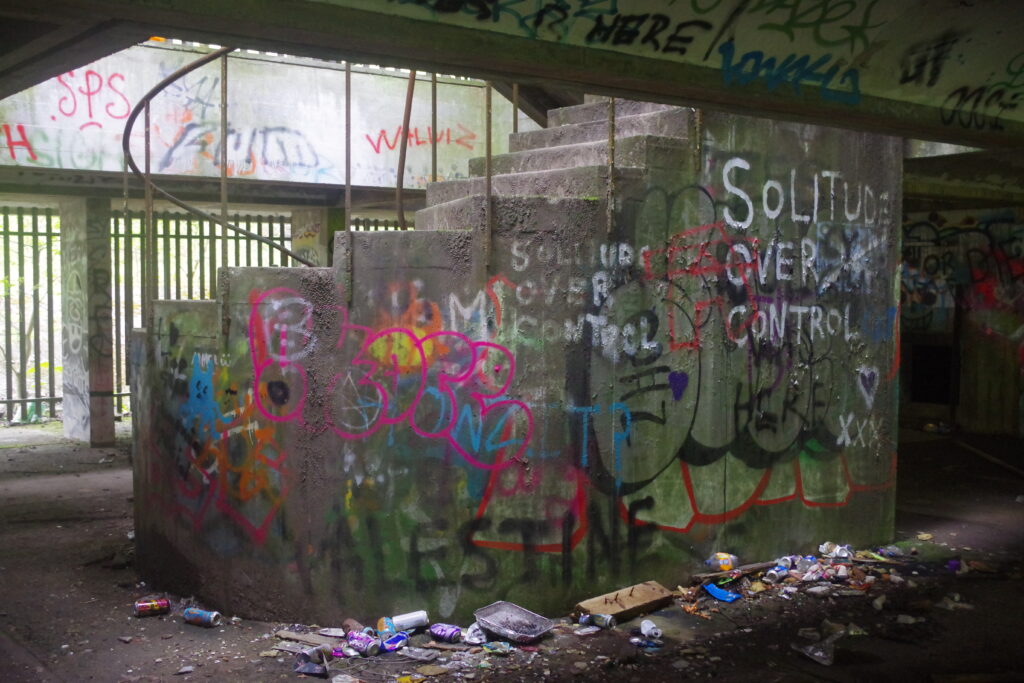
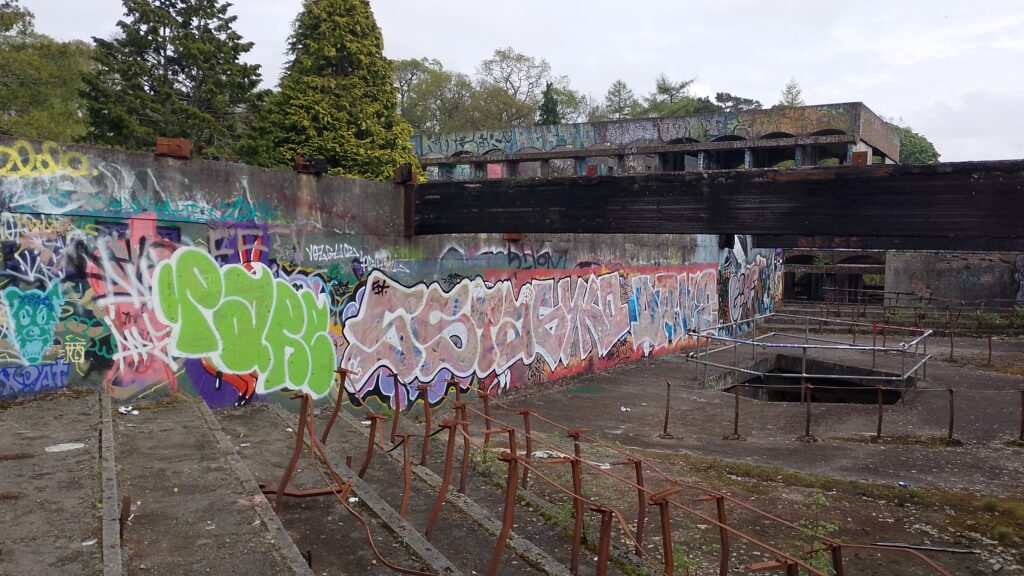
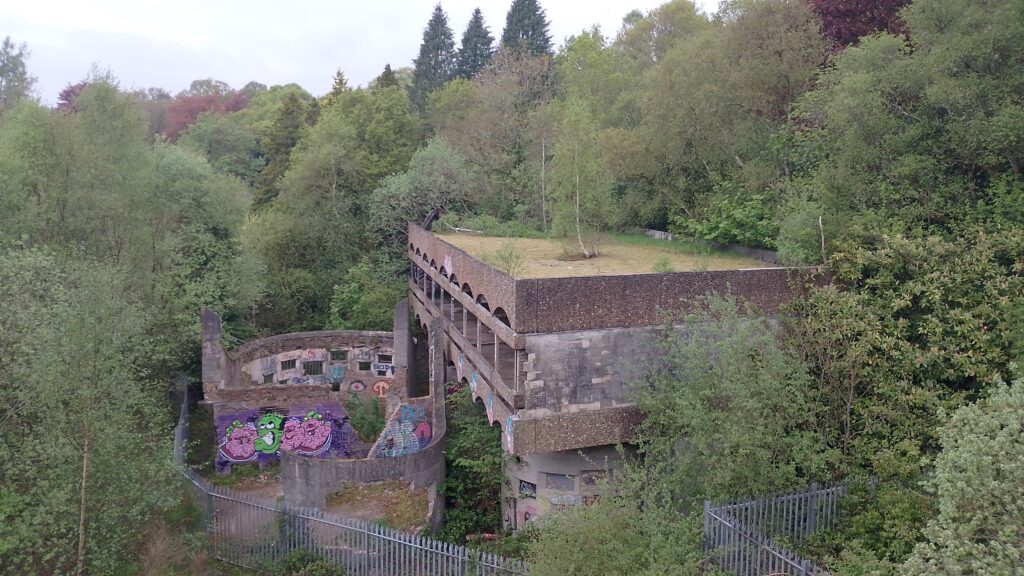
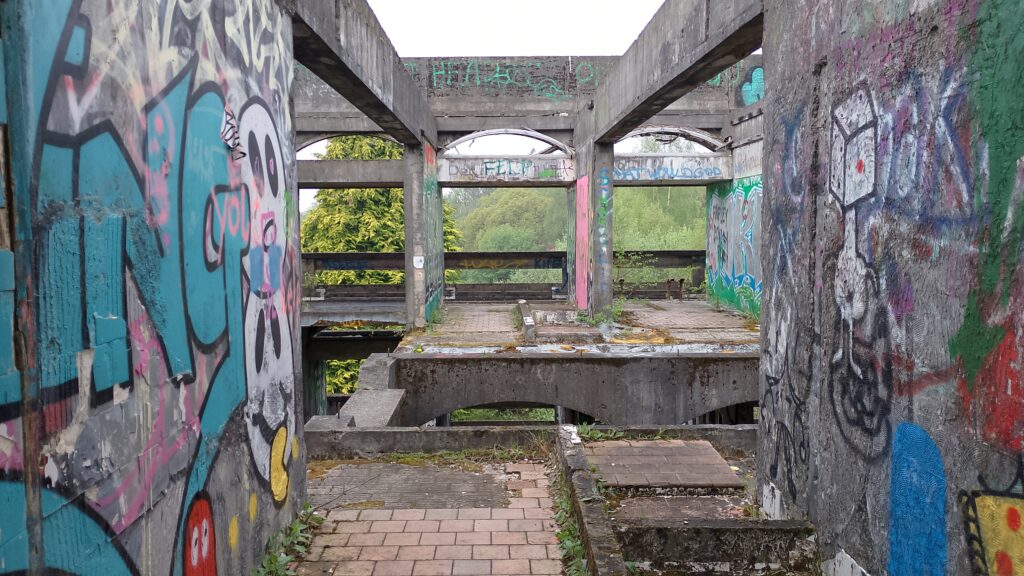
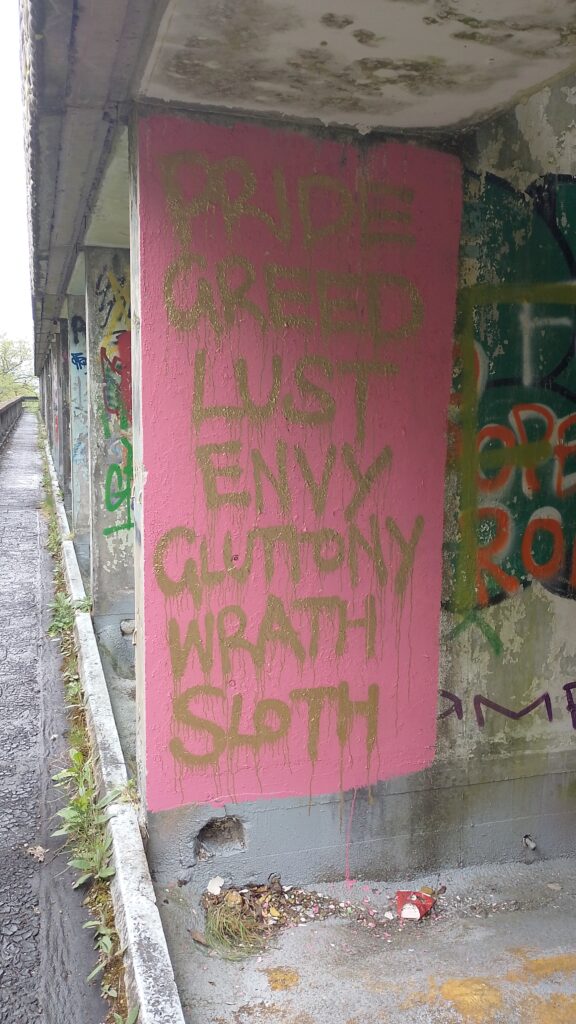
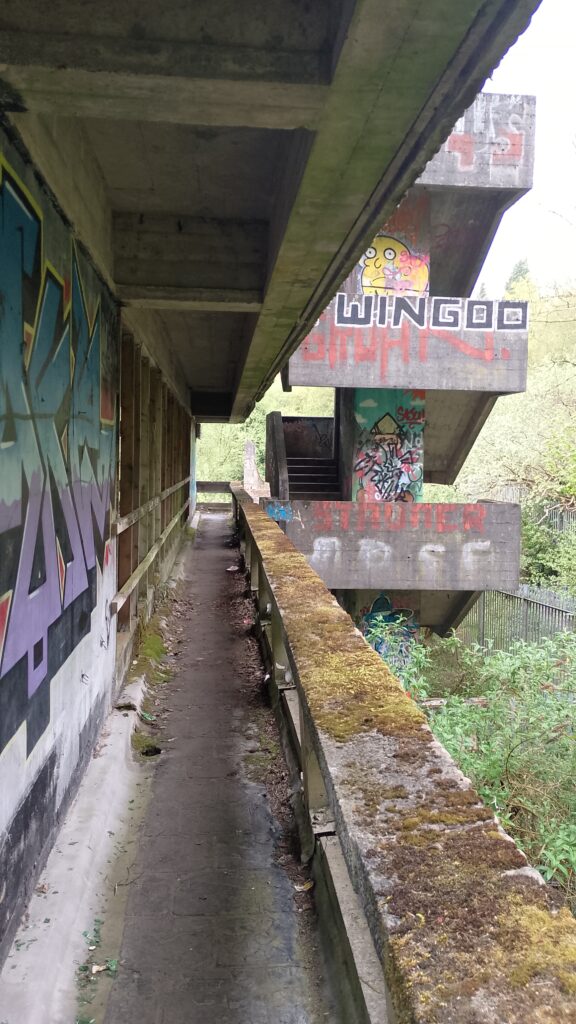
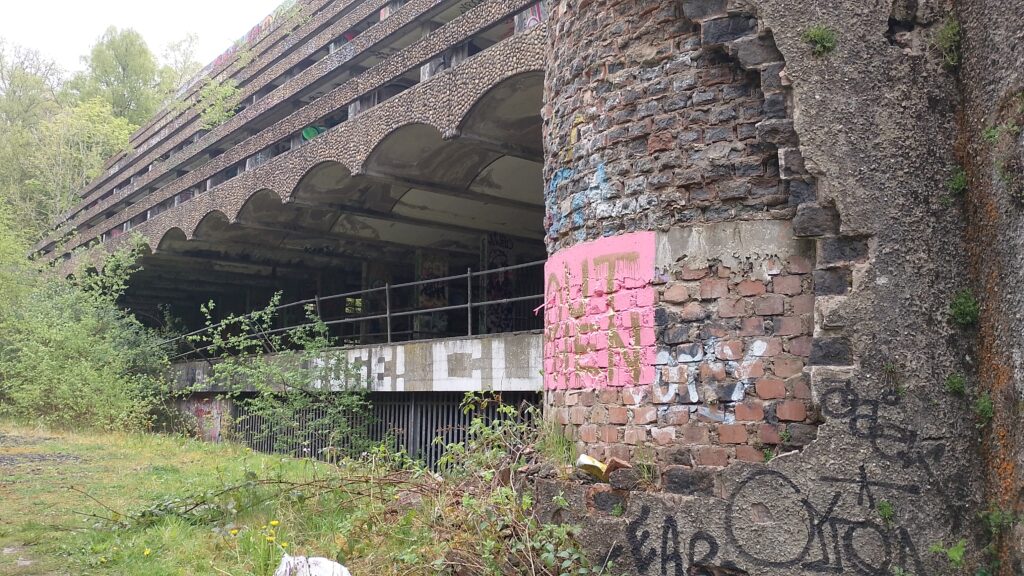
As you can see, the building is little more than a shell, and the remaining parts of it are in very poor condition. There’s evidence of fire damage and extensive vandalism, although one could argue that the ever-changing graffiti is part of the site’s evolution over time. I was intrigued to see that much of it is religious and spiritual in nature, and it added to the site’s atmosphere. It’s as much a spiritual ruin as any prehistoric burial mound or stone circle, given the purpose for which it was built, and the philosophy behind its design.
I love Brutalist architecture in general, but ecclesiastical Brutalism is a fascinating sub-genre. Church buildings have always had unique aspects of design intended to connect humans with the divine, and we always tend to think of spectacular medieval cathedrals in that regard. However, it seems just as easy to inspire that connection with modern concrete cubes, and there’s some amazing examples of this out there. Although it’s now stripped of all its original features and furnishings, the building’s main space is still imposing and vast, and it’s easy to see what it was intended to communicate. People still feel that today, hence the efforts to try and re-use and re-purpose the site, rather than letting it deteriorate further. While I understand and appreciate the desire to save the site, I have to wonder if it’s far too late for that now. The building is so far gone I don’t think it can be saved. Even preventing it from further deterioration is going to be a significant challenge, let alone restoring it, and keeping it secure would require a huge investment that no-one has been able to find to date. As it stands at the moment, it’s almost impossible to keep people out, and the building presents huge difficulties to anyone attempting to use it for anything, besides possibly illegal raves. Even the task of providing safe access to the building’s main space would be very difficult and expensive, and reminds me of a study Transport for London once conducted on the feasibility of opening an abandoned Underground station as a museum. They concluded that the necessary infrastructure was unaffordable, and would damage the historic fabric of the building far too much.
I can’t help feeling that the Catholic church is relieved they found some credulous mugs to offload the place onto. I can picture a bunch of senior clergy raising their glasses, and cackling mischievously, as they think of how much money they’ve saved, and how they now don’t need to worry about what happens to the site. In all honesty, I’m not convinced the new owners have a clue what they’re doing. They keep referring to some future vision for the site they’re going to come up with, but six years on, there’s no sign of this vision (perhaps they’re still praying for God to reveal it to them), and there’s no sign of anyone coming up with the huge sums of money needed to do anything meaningful with the ruins. I shouldn’t be too critical, as I don’t really know what’s going on behind the scenes, and it may yet come to something, but the website consists of little more than clearly-ignored pleas for people not to go in the buildings.
Personally, I’m not sure what I think about it all. Although I’m an atheist these days, I still think there’s a sense of awe and majesty about the place, and a ghost of lofty ideals and big dreams still haunts it. I’m familiar with those dreams, and in a sense they lay in ruins in my own life too. I was once certain the edifice of my faith would stand firm forever. It’s actually quite strange that my religious life lasted longer than that of St. Peter’s Seminary as an active institution, but the fate of the site mirrors that of my own religious life in strange ways that are hard to explain. What do we do with the ruins? What good can still come from them? Do we attempt to restore past glories, or do we just accept that certain things are doomed to decay, and let them crumble away gradually? If building certain things was a mistake, what positives are there in their legacy, and what can we learn for the future?
It’s highly appropriate that the Seminary keeps us asking big questions, even as it gradually crumbles into the dust from which it came.